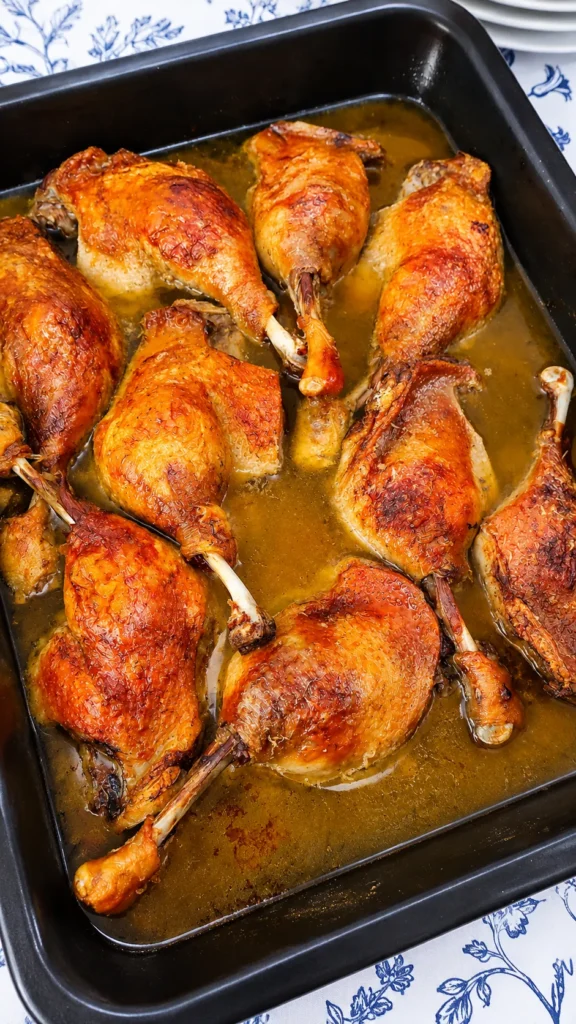
There is something incredibly comforting about a tray of golden, oven-roasted turkey legs fresh from the oven. With their beautifully browned skin, tender meat, and rich, flavorful cooking juices, these roasted turkey legs make a wonderful homemade meal for family dinners, Sunday lunches, and special occasions.
This recipe combines simple ingredients such as garlic, butter, olive oil, paprika, and aromatic herbs to create a delicious roasted turkey dish. The turkey legs are seasoned generously, roasted until tender, and finished with a beautiful golden crust.
One of the best things about this recipe is the delicious gravy that develops naturally during cooking. As the turkey roasts, its juices combine with butter, garlic, herbs, and broth, creating a savory sauce that is perfect for serving over mashed potatoes, rice, or roasted vegetables.
Whether you are preparing a holiday dinner or simply looking for a satisfying homemade meal, these oven-roasted turkey legs are an excellent choice.
Ingredients
For the Roasted Turkey Legs
-
6–8 turkey legs, approximately 4–5 pounds total
-
4 tablespoons unsalted butter, melted
-
3 tablespoons olive oil
-
6 garlic cloves, minced
-
2 teaspoons sweet paprika
-
1 teaspoon smoked paprika
-
1 teaspoon dried thyme
-
1 teaspoon dried rosemary
-
1 teaspoon onion powder
-
1 teaspoon freshly ground black pepper
-
1½ teaspoons salt, or to taste
-
1 tablespoon lemon juice
For the Garlic Butter Gravy
-
2 cups chicken or turkey broth
-
1 medium onion, sliced
-
3 garlic cloves, lightly crushed
-
2 tablespoons butter
-
1 teaspoon dried parsley
-
1 bay leaf
-
1 tablespoon cornstarch (optional, for thickening)
-
2 tablespoons cold water (if using cornstarch)
For Garnishing
-
Fresh parsley
-
Fresh thyme
-
Lemon wedges
Why This Recipe Works So Well
The secret to delicious oven-roasted turkey legs is the combination of seasoning, moisture, and controlled roasting.
Turkey legs contain connective tissue that becomes tender when cooked slowly with enough moisture. Unlike turkey breast, which can dry out quickly, turkey legs benefit from a longer cooking time.
The butter and olive oil help the skin develop a beautiful golden color while carrying the flavors of garlic and herbs.
Paprika adds warmth and an appetizing reddish-golden appearance, while rosemary and thyme provide a traditional roasted flavor.
The broth added to the roasting pan prevents the cooking juices from burning and creates the foundation for a delicious homemade gravy.
Choosing the Best Turkey Legs
For the best results, choose fresh turkey legs that are similar in size. This helps them cook evenly.
Look for meat with a natural pink color and skin that is intact.
If using frozen turkey legs, thaw them completely in the refrigerator before cooking.
Avoid roasting partially frozen turkey legs because they may cook unevenly.
The Secret to Crispy Golden Skin
Crispy skin is one of the highlights of this recipe.
Before seasoning, pat the turkey legs completely dry with paper towels.
Removing excess moisture allows the skin to brown more effectively.
Coating the skin with melted butter and olive oil also encourages a rich golden finish.
For additional crispiness, the turkey can be briefly roasted at a higher temperature toward the end of cooking.
However, the turkey should be monitored carefully to prevent burning.
Best Side Dishes
These roasted turkey legs pair beautifully with many classic side dishes.
Creamy mashed potatoes are an excellent choice because they absorb the flavorful gravy.
Roasted carrots, green beans, steamed broccoli, and buttery rice also complement the dish.
For a more traditional dinner, serve the turkey with homemade stuffing, roasted potatoes, or a fresh green salad.
Step-by-Step Preparation
Step 1: Prepare the Turkey Legs
Remove the turkey legs from their packaging and place them on a clean cutting board or large tray.
Pat each piece thoroughly dry using paper towels.
There is no need to rinse raw poultry, as rinsing can spread bacteria around the kitchen.
Trim away any excess loose skin if necessary, but leave most of the skin intact.
The skin helps protect the meat during roasting and develops a delicious golden crust.
Step 2: Prepare the Garlic Butter Marinade
In a medium mixing bowl, combine the melted butter and olive oil.
Add the minced garlic, sweet paprika, smoked paprika, dried thyme, rosemary, onion powder, black pepper, salt, and lemon juice.
Mix everything thoroughly until a smooth, fragrant seasoning mixture forms.
The marinade should have a rich golden-orange color.
Step 3: Season the Turkey
Place the turkey legs in a large bowl or roasting tray.
Pour the garlic butter mixture over the meat.
Using clean hands or a pastry brush, coat each turkey leg evenly.
Make sure the seasoning reaches all sides.
For additional flavor, gently loosen a small section of skin and rub a little seasoning underneath.
If time allows, cover the seasoned turkey and refrigerate for 30 minutes to 2 hours.
Step 4: Prepare the Roasting Pan
Preheat the oven to 375°F (190°C).
Choose a large, deep roasting pan that can hold the turkey legs without overcrowding.
Spread the sliced onion and crushed garlic cloves across the bottom.
Add the bay leaf and dried parsley.
Pour in the chicken or turkey broth.
The liquid should cover the bottom of the pan without completely submerging the turkey.
Step 5: Arrange the Turkey Legs
Place the seasoned turkey legs in the roasting pan, skin side facing upward.
Arrange them in a single layer whenever possible.
Leave a little space between the pieces to encourage even roasting.
Pour any remaining garlic butter marinade over the turkey.
Add small pieces of butter around the pan.
Step 6: Begin Roasting
Cover the roasting pan tightly with aluminum foil.
Place it on the middle rack of the preheated oven.
Roast for approximately 60 minutes.
During this stage, the turkey begins to cook gently while the broth and natural juices create a moist environment.
The onions and garlic soften and release their flavors into the cooking liquid.
Step 7: Baste the Turkey
Carefully remove the roasting pan from the oven.
Lift the aluminum foil away from your face to avoid hot steam.
Using a large spoon or turkey baster, collect some of the flavorful cooking juices from the bottom of the pan.
Spoon the juices over each turkey leg.
This adds flavor and helps prevent the exposed meat from drying out.
If the liquid level is very low, add a little more hot broth.
Step 8: Roast Until Golden Brown
Remove the aluminum foil and return the roasting pan to the oven.
Continue roasting for approximately 30–60 minutes, depending on the size of the turkey legs.
Baste once or twice during this stage.
The skin will gradually become golden brown, while the cooking juices develop a richer flavor.
For food safety, the thickest part of each turkey leg must reach at least 165°F (74°C), measured without touching the bone.
For especially tender dark meat, many cooks prefer an internal temperature around 175–185°F (79–85°C).
Step 9: Make the Skin Extra Crispy
If the turkey is fully cooked but the skin needs more color, increase the oven temperature to 425°F (220°C).
Roast for another 5–10 minutes, watching carefully.
The skin should become beautifully browned and slightly crisp.
Avoid leaving the turkey unattended during this final stage.
Step 10: Prepare the Homemade Gravy
Once the turkey is cooked, carefully transfer the legs to a serving platter.
Cover loosely with foil and allow them to rest.
Pour the cooking juices from the roasting pan into a saucepan.
Remove the bay leaf and skim off excess fat if desired.
For a smoother gravy, strain the liquid through a fine sieve.
Bring the juices to a gentle simmer.
If a thicker consistency is preferred, mix the cornstarch with cold water until smooth.
Slowly stir this mixture into the simmering gravy.
Cook for 2–3 minutes, stirring continuously, until the sauce thickens.
Taste and adjust the seasoning.
Step 11: Rest the Turkey
Allow the roasted turkey legs to rest for approximately 10–15 minutes before serving.
Resting helps the juices redistribute throughout the meat.
This makes the turkey more tender and flavorful when cut or pulled apart.
Step 12: Serve and Enjoy
Arrange the golden turkey legs on a large serving platter.
Spoon some of the warm garlic butter gravy over the meat.
Garnish with freshly chopped parsley or thyme.
Serve immediately with mashed potatoes, roasted vegetables, rice, or your favorite side dishes.
The result is a comforting homemade meal with tender turkey, crispy golden skin, and a delicious savory sauce.
Tips for Perfect Oven-Roasted Turkey Legs
Dry the skin thoroughly: Excess moisture can prevent proper browning.
Use a meat thermometer: Cooking times vary depending on the size of the turkey legs.
Do not overcrowd the pan: Give the turkey enough space to roast evenly.
Keep some liquid in the pan: Broth prevents the flavorful cooking juices from burning.
Allow the meat to rest: Resting improves the final texture and juiciness.
Save the cooking juices: They make an excellent base for homemade gravy.
Delicious Recipe Variations
Honey Garlic Turkey Legs
Add 2 tablespoons of honey to the marinade for a slightly sweet, caramelized finish.
Lemon Herb Turkey Legs
Increase the lemon juice and add fresh oregano, thyme, and rosemary for a brighter Mediterranean-inspired flavor.
Spicy Paprika Turkey Legs
Add ½ teaspoon cayenne pepper or crushed red pepper flakes for a gently spicy version.
Garlic Parmesan Turkey Legs
Sprinkle a little grated Parmesan over the cooked turkey just before serving for an additional savory flavor.
Storage and Reheating
Store leftover turkey in an airtight container in the refrigerator for up to 3–4 days.
To reheat, place the turkey in a baking dish with a few tablespoons of broth.
Cover with foil and warm in a 325°F (165°C) oven until the center reaches 165°F (74°C).
Cooked turkey can also be frozen for approximately 2–3 months for best quality.
Frequently Asked Questions
Can I use chicken legs instead of turkey legs?
Yes. Chicken legs work well with the same seasonings, but they generally require a shorter cooking time.
Should turkey legs be covered while roasting?
Covering them during the first stage helps retain moisture. Removing the foil later allows the skin to brown.
How do I know when the turkey is fully cooked?
Use a meat thermometer. The thickest part must reach at least 165°F (74°C).
Can I prepare this recipe ahead of time?
Yes. Season the turkey and refrigerate it, covered, for up to 24 hours before roasting.
Conclusion
Golden oven-roasted turkey legs with garlic butter gravy are a wonderful combination of simplicity, rich flavor, and comforting homemade cooking.
The tender meat, beautifully browned skin, and savory pan gravy make this recipe suitable for both everyday family dinners and special occasions.
With a handful of basic ingredients and a little patience, you can prepare a delicious roasted turkey dish that everyone at the table will enjoy.