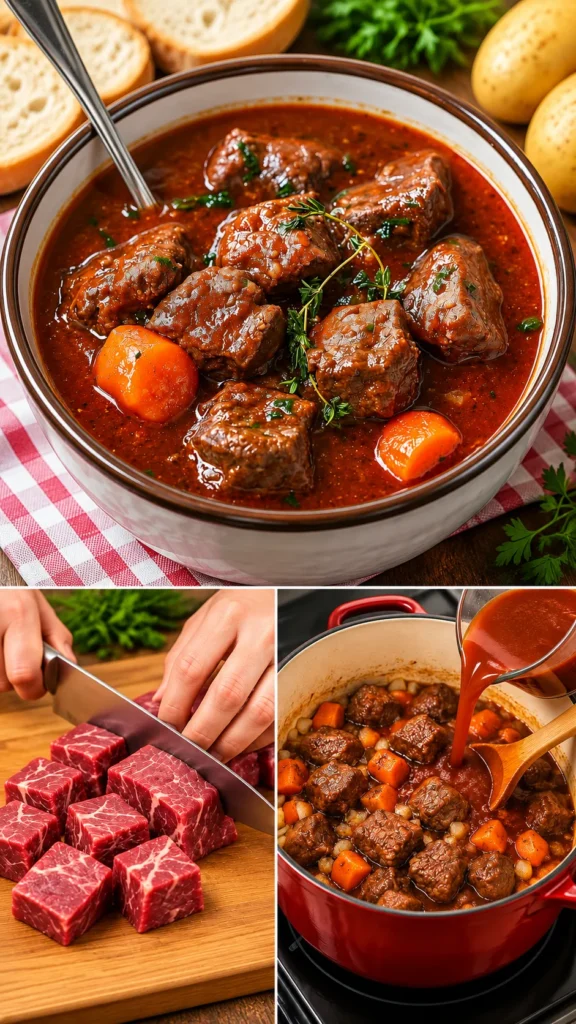
There is something incredibly comforting about a bowl of homemade beef stew. Tender chunks of beef simmered slowly in a rich tomato-based gravy, combined with sweet carrots, aromatic herbs, and savory seasonings, create a meal that feels warm, satisfying, and full of homemade goodness.
This hearty beef stew with carrots is a classic comfort food recipe that transforms simple ingredients into a deeply flavorful dish. The beef becomes wonderfully tender as it cooks, while the carrots absorb the delicious sauce and add a natural sweetness that balances the savory flavors.
The secret to this recipe is slow cooking. Allowing the beef to simmer gently gives the connective tissues time to soften, creating succulent pieces of meat that practically melt in your mouth.
The tomato gravy develops a beautiful deep-red color and a rich consistency. Garlic, onions, thyme, paprika, and beef broth work together to build layers of flavor.
Whether served for a family dinner, a cozy weekend meal, or a special gathering, this homemade beef stew is guaranteed to become a favorite.
Why You’ll Love This Beef Stew
This recipe is especially appealing because it combines simplicity with incredible flavor.
First, it uses affordable ingredients that are easy to find in most grocery stores.
Second, the cooking process is straightforward. After preparing the vegetables and browning the beef, most of the work happens while the stew simmers.
Another advantage is that beef stew tastes even better the following day. As it rests, the flavors continue to blend, creating an even richer sauce.
It is also versatile. You can serve it with mashed potatoes, rice, crusty bread, or buttered noodles.
The combination of tender beef, soft carrots, and thick tomato gravy makes every spoonful satisfying.
Recipe Information
-
Preparation time: 20 minutes
-
Cooking time: 2 hours 15 minutes to 2 hours 45 minutes
-
Total time: Approximately 3 hours
-
Servings: 6
-
Difficulty: Easy to moderate
-
Cooking method: Stovetop slow simmering
Ingredients
For the Beef Stew
-
2 lbs (900 g) beef chuck roast, cut into large cubes
-
3 medium carrots, peeled and cut into thick pieces
-
1 large onion, finely chopped
-
4 garlic cloves, minced
-
2 tablespoons olive oil
-
2 tablespoons unsalted butter
-
2 tablespoons all-purpose flour
-
1 teaspoon salt, or to taste
-
½ teaspoon freshly ground black pepper
-
1 teaspoon smoked paprika
-
1 teaspoon dried thyme
-
½ teaspoon dried rosemary
For the Rich Tomato Gravy
-
2 cups (480 ml) beef broth
-
1½ cups (360 ml) tomato passata or crushed tomatoes
-
2 tablespoons tomato paste
-
1 tablespoon Worcestershire sauce
-
1 teaspoon brown sugar, optional
-
2 bay leaves
-
½ cup (120 ml) water, if needed
-
1 teaspoon balsamic vinegar, optional
For Garnishing
-
2 tablespoons freshly chopped parsley
-
2 fresh thyme sprigs
-
Freshly ground black pepper
Choosing the Best Beef for Stew
The cut of beef plays an important role in the final texture.
Beef chuck is one of the best choices because it contains connective tissue and a moderate amount of fat. During slow cooking, the collagen gradually breaks down into gelatin, helping the meat become tender while enriching the gravy.
Avoid using very lean cuts that are better suited to quick cooking. These can become dry when simmered for extended periods.
Cut the beef into approximately 1½-inch cubes. Keeping the pieces relatively large prevents them from breaking apart during cooking.
For the best results, pat the meat dry with paper towels before browning.
Removing excess surface moisture helps the beef develop a flavorful crust.
The Secret to a Deeply Flavored Tomato Gravy
A delicious beef stew depends on building flavor in stages.
Browning the meat is essential because it creates caramelized flavors that enrich the sauce.
Cooking tomato paste briefly with the onions and garlic also intensifies its flavor and reduces its raw acidity.
Beef broth provides a savory foundation, while herbs add warmth and complexity.
The carrots contribute natural sweetness, balancing the acidity of the tomatoes.
A small amount of Worcestershire sauce adds additional depth.
Finally, slow simmering allows the sauce to thicken naturally as the beef releases gelatin.
The result is a rich, glossy gravy that coats every piece of meat.
Part 2: Step-by-Step Preparation
Step 1: Prepare the Beef
Place the beef chuck roast on a clean cutting board.
Using a sharp knife, cut the meat into evenly sized cubes approximately 1½ inches thick.
Trim away any large pieces of tough exterior fat, but leave some marbling for flavor.
Pat the beef dry with paper towels.
Season generously with salt, black pepper, smoked paprika, and dried thyme.
Sprinkle the flour over the beef and toss gently until the pieces are lightly coated.
This thin coating helps develop a golden crust and contributes to thickening the gravy later.
Step 2: Brown the Beef
Heat a large Dutch oven or heavy-bottomed pot over medium-high heat.
Add the olive oil.
Once hot, place the beef cubes into the pot in a single layer.
Avoid overcrowding the pan. If necessary, cook the beef in two or three batches.
Allow the meat to brown for approximately two to three minutes per side.
Turn the pieces until several sides develop a deep golden-brown crust.
The beef does not need to cook through at this stage.
Transfer the browned pieces to a plate and set aside.
Leave the flavorful browned bits at the bottom of the pot.
Step 3: Sauté the Onions and Garlic
Reduce the heat to medium.
Add the butter to the same pot.
Once melted, add the chopped onion.
Cook for approximately four to five minutes, stirring occasionally, until softened and lightly golden.
Add the minced garlic and cook for another 30 seconds.
Stir continuously to prevent the garlic from burning.
The mixture should become wonderfully fragrant.
Step 4: Add the Tomato Paste
Add the tomato paste to the onion mixture.
Stir thoroughly and cook for approximately two minutes.
This step helps deepen the tomato flavor.
The paste should darken slightly and become more aromatic.
If the mixture begins sticking excessively, add a small splash of beef broth.
Use a wooden spoon to scrape the bottom of the pot, releasing the flavorful browned bits.
Step 5: Build the Tomato Gravy
Slowly pour in the beef broth while stirring.
Add the tomato passata or crushed tomatoes.
Stir until the ingredients are thoroughly combined.
Add Worcestershire sauce, dried rosemary, bay leaves, and optional brown sugar.
Bring the mixture to a gentle simmer.
The sauce should have a rich red color and a balanced savory aroma.
Taste carefully and adjust the seasoning if necessary.
Step 6: Return the Beef to the Pot
Add the browned beef cubes back into the pot along with any accumulated juices.
Stir gently to coat every piece with the tomato gravy.
The liquid should mostly cover the beef.
If necessary, add a small amount of water or additional broth.
Bring the mixture just to a simmer.
Reduce the heat to low and cover the pot with a lid.
Allow the beef to cook gently for approximately 1 hour and 30 minutes.
Check occasionally and stir carefully to prevent sticking.
The stew should simmer gently rather than boil rapidly.
Step 7: Add the Carrots
While the beef cooks, peel the carrots and cut them into thick rounds or large chunks.
After the initial simmering period, remove the lid and add the carrots.
Stir carefully to distribute them throughout the stew.
Cover the pot again and continue cooking for another 40–60 minutes.
During this time, the carrots will soften and absorb the flavorful tomato gravy.
The beef should gradually become fork-tender.
If the meat still feels tough, continue simmering until it softens.
Cooking times can vary depending on the cut and size of the beef pieces.
Step 8: Adjust the Gravy
Once the beef is tender, remove the lid.
Examine the consistency of the gravy.
If the sauce appears too thin, allow the stew to simmer uncovered for approximately 10–15 minutes.
Stir occasionally as the liquid reduces.
If the sauce becomes too thick, add a small amount of warm beef broth.
For an especially glossy finish, stir in a small teaspoon of butter just before serving.
Remove the bay leaves.
Step 9: Add the Final Seasonings
Taste the stew and adjust the salt and black pepper.
For additional depth, stir in a teaspoon of balsamic vinegar.
This optional ingredient enhances the savory flavors and balances the richness of the meat.
Sprinkle in half of the chopped parsley.
Allow the stew to rest for approximately five minutes after removing it from the heat.
This brief resting period helps the flavors settle.
Step 10: Serve the Beef Stew
Ladle the hot beef stew into deep serving bowls.
Make sure each portion contains generous pieces of tender beef, carrots, and rich tomato gravy.
Garnish with freshly chopped parsley and a sprig of thyme.
Serve immediately with crusty bread, mashed potatoes, rice, or another favorite side dish.
The thick, aromatic gravy is perfect for dipping bread or spooning over creamy potatoes.
Best Side Dishes for Beef Stew
Creamy Mashed Potatoes
Mashed potatoes are one of the most popular accompaniments.
Their smooth, buttery texture complements the rich tomato gravy beautifully.
Crusty French Bread
Freshly baked baguette or rustic sourdough bread is ideal for soaking up the delicious sauce.
Steamed Rice
Fluffy white rice provides a simple and satisfying base.
The grains absorb the flavorful gravy without overpowering the beef.
Buttered Egg Noodles
Tender egg noodles tossed with butter and parsley make an excellent alternative.
Their mild flavor allows the beef stew to remain the star of the meal.
Tips for Perfect Beef Stew Every Time
Brown the Beef in Batches
Overcrowding the pot causes the meat to release moisture and steam rather than brown.
Cooking in batches produces a deeper flavor.
Keep the Heat Low
Slow simmering is essential for tender beef.
Rapid boiling can cause the meat fibers to tighten and may reduce the liquid too quickly.
Cut the Carrots into Thick Pieces
Thin carrot slices may become overly soft during prolonged cooking.
Larger pieces retain their shape and provide a pleasant texture.
Allow Enough Cooking Time
Some cuts of beef require additional simmering to become tender.
If the meat is still chewy, it usually needs more time rather than higher heat.
Taste Before Serving
Tomato products and beef broth vary in saltiness and acidity.
Always taste the finished stew and adjust the seasoning accordingly.
Storage and Reheating
Homemade beef stew is excellent for preparing meals in advance.
Allow leftovers to cool briefly, then transfer them to airtight containers and refrigerate within two hours.
Stored at 40°F (4°C) or below, the stew will keep for approximately three to four days.
For longer storage, freeze individual portions in freezer-safe containers for up to three months for the best quality.
Thaw frozen stew overnight in the refrigerator.
Reheat gently in a saucepan over medium-low heat, stirring occasionally, until thoroughly hot.
Add a splash of beef broth or water if the gravy has thickened during storage.
Leftovers should reach 165°F (74°C) when reheated.
Frequently Asked Questions
Can I make this beef stew in a slow cooker?
Yes. Brown the beef and sauté the onions and garlic first for the best flavor.
Transfer everything to a slow cooker and cook on low for approximately seven to eight hours, or until the beef is tender.
Can I add potatoes directly to the stew?
Absolutely.
Add peeled, cubed potatoes during the final 30–40 minutes of stovetop cooking.
They will absorb the delicious gravy and make the dish even more filling.
Why is my beef still tough?
The beef may not have cooked long enough.
Cuts such as chuck contain connective tissue that needs time to break down.
Continue simmering gently and check the texture periodically.
Can I make the stew without flour?
Yes.
Simply omit the flour and allow the gravy to reduce naturally.
You can also thicken the sauce at the end with a small amount of cornstarch mixed with cold water.
Does beef stew taste better the next day?
Many people find that it does.
As the stew rests in the refrigerator, the flavors blend and develop, creating a richer overall taste.
Conclusion
Hearty Beef Stew with Carrots in Rich Tomato Gravy is the perfect combination of tender beef, wholesome vegetables, aromatic herbs, and a deeply flavorful sauce.
The slow-cooking process transforms simple ingredients into a comforting homemade meal that is ideal for family dinners, chilly evenings, or weekend gatherings.
With its succulent beef, naturally sweet carrots, and thick tomato gravy, every spoonful delivers warmth and satisfaction.
Serve it with crusty bread, fluffy rice, or creamy mashed potatoes for a complete and delicious meal that everyone will enjoy.