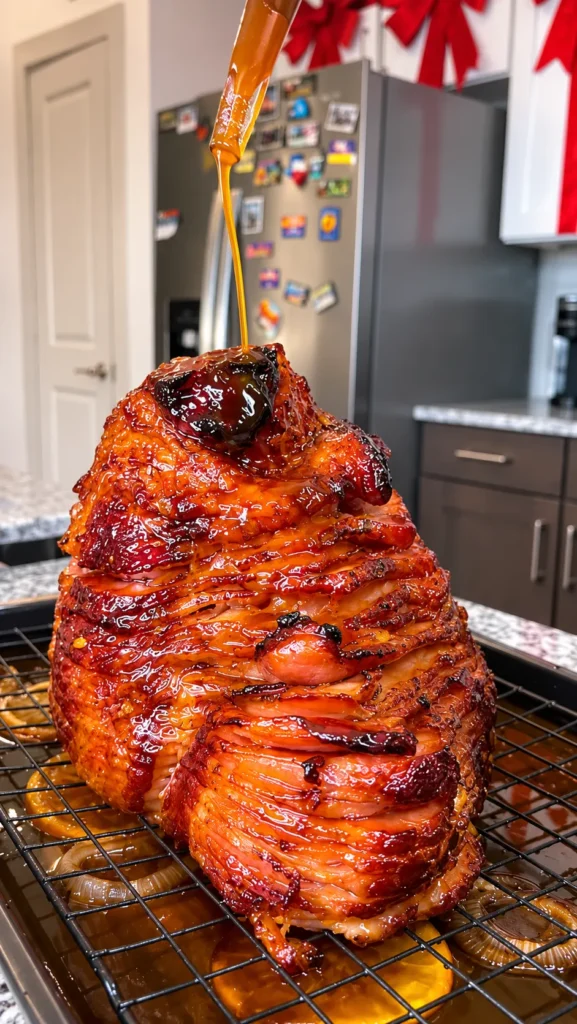
Nothing brings the family together during the holidays quite like a beautifully glazed spiral ham. With its glossy caramelized surface, tender slices, and irresistible combination of sweet honey, brown sugar, and savory spices, this Brown Sugar Honey Glazed Spiral Ham is the perfect centerpiece for Christmas, Easter, Thanksgiving, or a special Sunday dinner.
This classic holiday recipe transforms a fully cooked spiral-cut ham into a spectacular dish with a rich, sticky glaze that coats every slice. As the ham warms in the oven, the brown sugar melts into the honey and butter, creating a golden caramel-like coating with a delicious balance of sweetness and savory flavor.
The secret to an exceptional glazed ham is keeping the meat moist while allowing the outside to develop a deep amber finish. A carefully prepared glaze, gentle oven heating, and frequent basting during the final stage produce beautiful results.
Unlike complicated holiday roasts, spiral ham is surprisingly simple to prepare. Since most spiral-cut hams are already fully cooked, the main task is to warm the meat gently and create a flavorful glaze without drying out the slices.
The result is a tender, juicy ham with a shiny, slightly sticky coating that looks impressive on any holiday table.
Ingredients
For the Spiral Ham
-
1 fully cooked, bone-in spiral-cut ham, approximately 8–10 pounds (3.6–4.5 kg)
-
1 cup apple juice or pineapple juice
-
2 tablespoons unsalted butter
-
1 large onion, sliced (optional)
-
2 cinnamon sticks (optional)
For the Brown Sugar Honey Glaze
-
1 cup packed brown sugar
-
½ cup pure honey
-
¼ cup maple syrup
-
¼ cup Dijon mustard
-
3 tablespoons unsalted butter
-
2 tablespoons apple cider vinegar
-
2 tablespoons orange juice
-
1 teaspoon ground cinnamon
-
½ teaspoon ground cloves
-
½ teaspoon ground ginger
-
¼ teaspoon ground nutmeg
-
¼ teaspoon freshly ground black pepper
Optional Garnishes
-
Fresh rosemary sprigs
-
Orange slices
-
Fresh cranberries
-
Pineapple rings
-
Whole cloves
Why This Honey Glazed Ham Is So Delicious
The secret to this recipe is the perfect balance between sweetness, acidity, and savory flavor.
Brown sugar creates the deep caramelized coating that gives the ham its beautiful golden-brown appearance. As it melts, it forms a rich glaze that clings to the surface of the meat.
Honey contributes natural sweetness and creates the glossy finish that makes glazed ham so appealing.
Maple syrup adds a subtle richness and enhances the caramel flavor without overpowering the ham.
Dijon mustard is particularly important because it balances the sweetness of the glaze with a slightly sharp, tangy flavor.
Apple cider vinegar and orange juice add acidity, preventing the glaze from tasting excessively sweet.
Warm spices such as cinnamon, cloves, ginger, and nutmeg provide the traditional holiday aroma that makes this dish especially inviting.
The combination of these ingredients produces a glaze that is sweet, savory, aromatic, and wonderfully sticky.
Choosing the Best Spiral Ham
For this recipe, a fully cooked, bone-in spiral-cut ham is an excellent choice.
The bone helps retain flavor, while the spiral slicing makes serving much easier.
When purchasing the ham, look for one labeled “fully cooked” or “ready to eat.”
A ham weighing approximately 8–10 pounds is generally suitable for 12–16 people, depending on portion sizes and side dishes.
Avoid choosing a ham that appears excessively dry or has very little natural moisture.
A good-quality ham should have a pleasant pink color and evenly cut slices.
Bone-In or Boneless Ham?
Bone-in ham is often preferred for holiday meals because of its rich flavor and traditional presentation.
Boneless ham is easier to carve and may be more convenient for smaller gatherings.
Both varieties can be prepared with this glaze, although cooking times may differ.
The Secret to a Perfectly Caramelized Glaze
One of the most common mistakes when preparing glazed ham is applying the sugar-based glaze too early.
Brown sugar and honey can burn during prolonged exposure to high oven temperatures.
For the best results, warm the ham gently while covered with aluminum foil.
During the final 20–30 minutes, uncover the ham and apply the glaze in several thin layers.
This method allows the glaze to thicken and caramelize without becoming excessively dark or bitter.
The finished ham should have a glossy, deep golden-brown coating with slightly caramelized edges.
Part 2: Step-by-Step Preparation
Step 1: Prepare the Ham
Remove the spiral ham from its packaging.
Discard any plastic wrapping, absorbent pads, or non-oven-safe components.
If the ham comes with a glaze packet, set it aside or discard it because this recipe uses a homemade glaze.
Pat the exterior lightly with paper towels.
Allow the ham to stand at room temperature for approximately 20–30 minutes while preparing the remaining ingredients. Do not leave it unrefrigerated for more than two hours.
Step 2: Preheat the Oven
Preheat your oven to 325°F (165°C).
Position an oven rack in the lower third of the oven to provide enough space for the ham.
Choose a large roasting pan with a rack.
If you do not have a roasting rack, place thick onion slices in the bottom of the pan to elevate the ham slightly.
Step 3: Prepare the Roasting Pan
Pour the apple juice or pineapple juice into the bottom of the roasting pan.
Add the sliced onion and cinnamon sticks if using.
The liquid helps maintain a moist environment during heating and prevents the drippings from burning.
Place the ham on the roasting rack with the flat, cut side facing downward.
This position helps protect the sliced surface from drying out.
Step 4: Cover and Warm the Ham
Cover the roasting pan tightly with aluminum foil.
Place the ham in the preheated oven.
Warm it according to the package directions, generally allowing approximately 10–15 minutes per pound for a fully cooked spiral ham.
For an 8–10-pound ham, this often takes around 1½–2½ hours, depending on the oven and ham.
Use a meat thermometer to monitor the internal temperature.
For a fully cooked ham packaged in a USDA-inspected facility, reheat to 140°F (60°C). For other fully cooked hams, reheat to 165°F (74°C). Follow the package instructions when they specify a different safe preparation method.
Step 5: Prepare the Honey Brown Sugar Glaze
While the ham warms, prepare the glaze.
In a medium saucepan, combine the brown sugar, honey, maple syrup, Dijon mustard, butter, apple cider vinegar, and orange juice.
Place the saucepan over medium-low heat.
Stir continuously until the butter melts and the brown sugar dissolves.
Add the cinnamon, cloves, ginger, nutmeg, and black pepper.
Continue stirring until everything is well combined.
Step 6: Simmer the Glaze
Allow the glaze to simmer gently for approximately 5–7 minutes.
Stir frequently to prevent the sugar from burning.
The mixture should become slightly thicker and develop a smooth, syrupy consistency.
Remove the saucepan from the heat.
Remember that the glaze will thicken further as it cools.
If it becomes too thick to brush, gently reheat it with a tablespoon of water or orange juice.
Step 7: Apply the First Layer of Glaze
Approximately 25–30 minutes before the ham finishes reheating, remove the roasting pan from the oven.
Carefully uncover the ham.
Brush a generous layer of warm glaze over the entire surface.
Use a pastry brush to work some of the glaze between the spiral slices.
Avoid pulling the slices apart excessively because they may separate from the bone.
Return the ham to the oven uncovered.
Step 8: Continue Glazing
After approximately 10 minutes, remove the ham briefly and apply another layer of glaze.
Use some of the juices collected in the roasting pan to baste the meat.
Return it to the oven.
Repeat this process once or twice more, depending on how much glaze remains.
Several thin layers create a more attractive finish than one excessively thick coating.
The surface should gradually become glossy and beautifully caramelized.
Step 9: Caramelize the Exterior
If the ham has reached its safe reheating temperature but the glaze needs more color, increase the oven temperature to 400°F (205°C) for approximately 3–5 minutes.
Watch carefully because the sugar can darken very quickly.
Alternatively, use the broiler briefly, keeping the ham a safe distance from the heating element.
Never leave the ham unattended during this step.
The goal is a deep amber glaze with lightly caramelized edges, not a burnt coating.
Step 10: Rest the Ham
Remove the roasting pan from the oven.
Transfer the ham carefully to a large serving platter or cutting board.
Loosely cover it with aluminum foil.
Allow it to rest for approximately 10–15 minutes.
This resting period helps the juices settle and makes serving easier.
Step 11: Prepare the Final Glaze
If desired, transfer some of the remaining glaze into a small saucepan.
Add a few tablespoons of the roasting juices after skimming off excess fat.
Bring the mixture to a gentle simmer for several minutes.
If using juices that contacted the ham, bring the sauce to a full boil before serving.
Stir until the glaze becomes smooth and glossy.
Taste and adjust with a little additional mustard or vinegar if necessary.
Step 12: Serve the Spiral Ham
Place the glazed ham on a large serving platter.
Arrange orange slices, fresh rosemary, or cranberries around it for a festive presentation.
Brush a final layer of glaze over the surface.
Carefully separate the spiral slices using a carving knife.
Serve warm with additional glaze on the side.
Tips for the Perfect Holiday Ham
Keep the ham covered during most of the heating time. This helps retain moisture and prevents the slices from drying out.
Use a meat thermometer. Internal temperature is more reliable than cooking time alone.
Apply the glaze near the end. Honey and brown sugar can burn when exposed to heat for too long.
Baste carefully. A little roasting liquid helps keep the surface moist.
Avoid overheating. Since a fully cooked ham only needs reheating, excessive oven time can make it dry.
Let the ham rest before serving. This makes the slices easier to handle and helps preserve their juiciness.
Delicious Glaze Variations
Pineapple Brown Sugar Glaze
Replace the orange juice with pineapple juice and add two tablespoons of pineapple preserves.
This variation produces a tropical sweetness that pairs beautifully with savory ham.
Maple Mustard Glaze
Increase the maple syrup to ½ cup and reduce the honey slightly.
Add an extra tablespoon of Dijon mustard for a stronger sweet-and-tangy flavor.
Orange Honey Glaze
Add one tablespoon of freshly grated orange zest and replace the apple cider vinegar with fresh orange juice.
The result is a bright, citrusy glaze.
Spicy Honey Glaze
Add ¼ teaspoon of cayenne pepper or a small amount of crushed red pepper flakes.
The gentle heat balances the sweetness of the honey and brown sugar.
Best Side Dishes for Glazed Ham
This beautiful holiday ham pairs wonderfully with traditional comfort-food side dishes.
Creamy mashed potatoes are an excellent choice because they balance the rich, sweet glaze.
Scalloped potatoes or cheesy potato casserole are also popular accompaniments.
For vegetables, consider roasted carrots, green beans, Brussels sprouts, or buttery corn.
Soft dinner rolls, homemade biscuits, and cornbread are perfect for serving alongside the ham.
A fresh green salad or cranberry sauce can provide a refreshing contrast to the richness of the meat.
How to Store Leftover Ham
Allow leftover ham to cool slightly, then refrigerate it within two hours.
Store the slices in airtight containers in the refrigerator for approximately 3–4 days.
For longer storage, freeze the ham in meal-sized portions.
Wrap the slices tightly in freezer-safe packaging to help prevent freezer burn.
For the best quality, use frozen ham within one to two months.
When reheating, add a small amount of broth or water and cover the meat to help retain moisture.
Creative Ways to Use Leftover Ham
Leftover spiral ham is incredibly versatile.
Use thin slices to prepare grilled ham and cheese sandwiches.
Dice the ham and add it to scrambled eggs, breakfast casseroles, or omelets.
It also works beautifully in creamy pasta dishes, potato soup, bean soup, and homemade quiche.
For a quick family dinner, combine chopped ham with cooked potatoes, cheese, and vegetables in a baking dish.
Another delicious option is to add leftover ham to homemade fried rice with peas, carrots, and scrambled eggs.
Frequently Asked Questions
Do I need to cook a fully cooked spiral ham?
A fully cooked ham is already cooked, but it is commonly reheated before serving. Follow the package instructions and appropriate food-safety guidance.
Why is my spiral ham dry?
The most common reason is overheating. Cover the ham during reheating and use a meat thermometer.
Can I make the glaze ahead of time?
Yes. The glaze can be prepared up to three days in advance and stored in the refrigerator.
Reheat it gently before brushing it over the ham.
Can I use a boneless ham?
Absolutely. Boneless ham works well with this recipe, although the reheating time may be different.
How much ham should I buy per person?
For bone-in ham, plan approximately ¾ pound per person. For boneless ham, approximately ½ pound per person is usually sufficient.
Final Thoughts
Brown Sugar Honey Glazed Spiral Ham is a timeless holiday favorite that combines beautiful presentation with unforgettable flavor.
The tender, juicy slices, glossy caramelized coating, and perfect balance of honey, brown sugar, mustard, and warm spices make this dish a wonderful centerpiece for family celebrations.
Whether you are preparing Christmas dinner, hosting Easter brunch, or simply planning a special weekend meal, this recipe delivers a delicious and impressive result without complicated preparation.
Serve it with your favorite homemade side dishes, gather everyone around the table, and enjoy a comforting holiday classic that is sure to become a family tradition.